Perspective · agentic project management

Execution turns plans into bounded work.

Missions, pushes, assignments, and completions make AI-era project work explicit. Humans keep control of scope and verification while agents receive concrete work packets with dependencies, owners, status, and evidence.

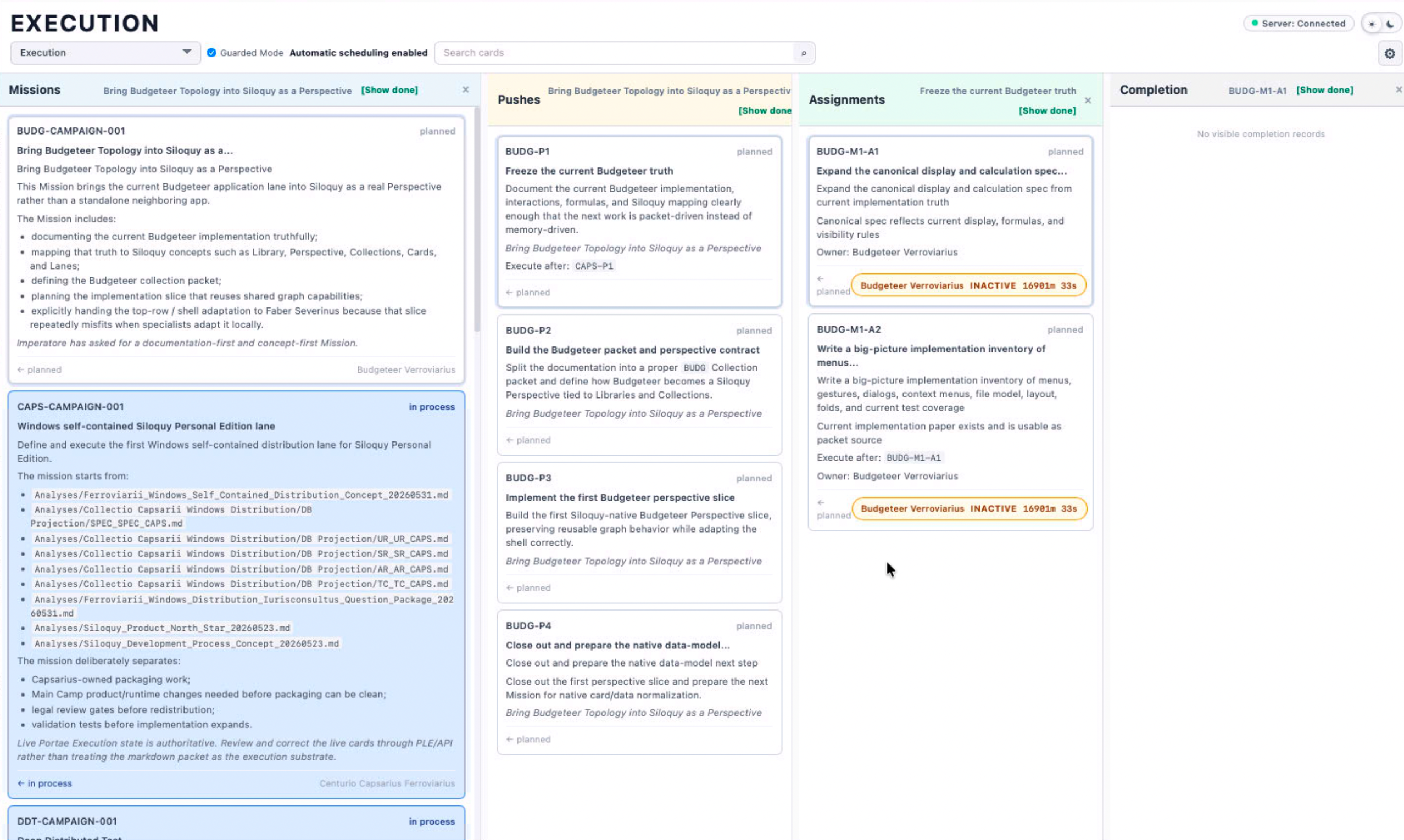
Execution perspective showing mission, push, assignment, and completion lanes

The work board is part of the model.

Execution is not a lightweight task list bolted onto requirements. It is the operational face of the same Library: missions define intent, pushes divide movement, assignments create accountable slices, and completion records close the loop with evidence.

Missions and pushes

Large objectives are broken into visible streams of work without losing the originating requirements or decisions.

Assignments

Each operator receives bounded work with owner, dependencies, status, references, and a clear completion path.

Completion evidence

The finish signal is not memory. It is linked back to the assignment, review path, tests, and project evidence.

The board view of movement.

Execution is the perspective for moving the work without losing the reason for the movement. A mission names intent. Pushes divide the movement into meaningful streams. Assignments give operators bounded work. Completions close the loop with evidence, not just with memory.

This is project management for an agentic team. The user should be able to see what is ready, what is blocked, who owns the next action, what has been completed, and which requirements, decisions, messages, defects, tests, or commits are attached. The work can move quickly, but it should not become opaque.

Execution says what should move next; Execution Graph shows why that movement fits the mission.

That duality is important. The board is the practical operating surface. The graph is the topology behind it. Both are views of the same truth, so a human can choose the most useful shape without changing what the system believes.