AI engineering workbench · requirements · graphs · messages · execution

Siloquy.com

Requirements, code, UML representation, agentic project management, and evidence in one system.

Siloquy.com combines requirements management down to architecture, code analysis and creation through graphical Meaning Graphs, decentralized messaging for humans and agents, and project execution for the AI era. Requirements, diagrams, messages, agent actions, commits, defects, and evidence remain connected instead of dissolving into tickets and chat logs.

A technical graph connecting repository evidence, UML representation, meaning cells, requirements, comments, and agent dispatch

One system model, multiple perspectives.

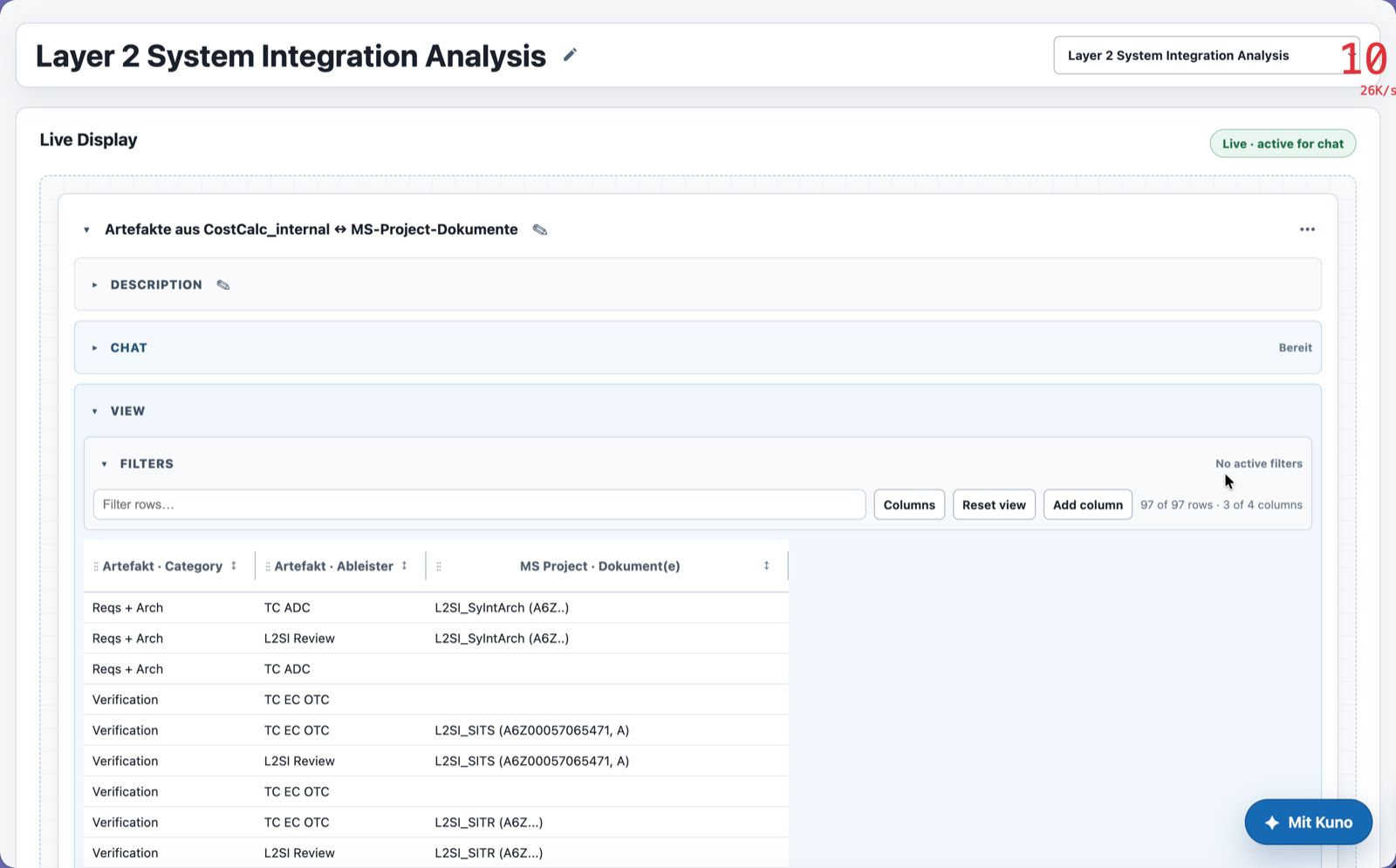
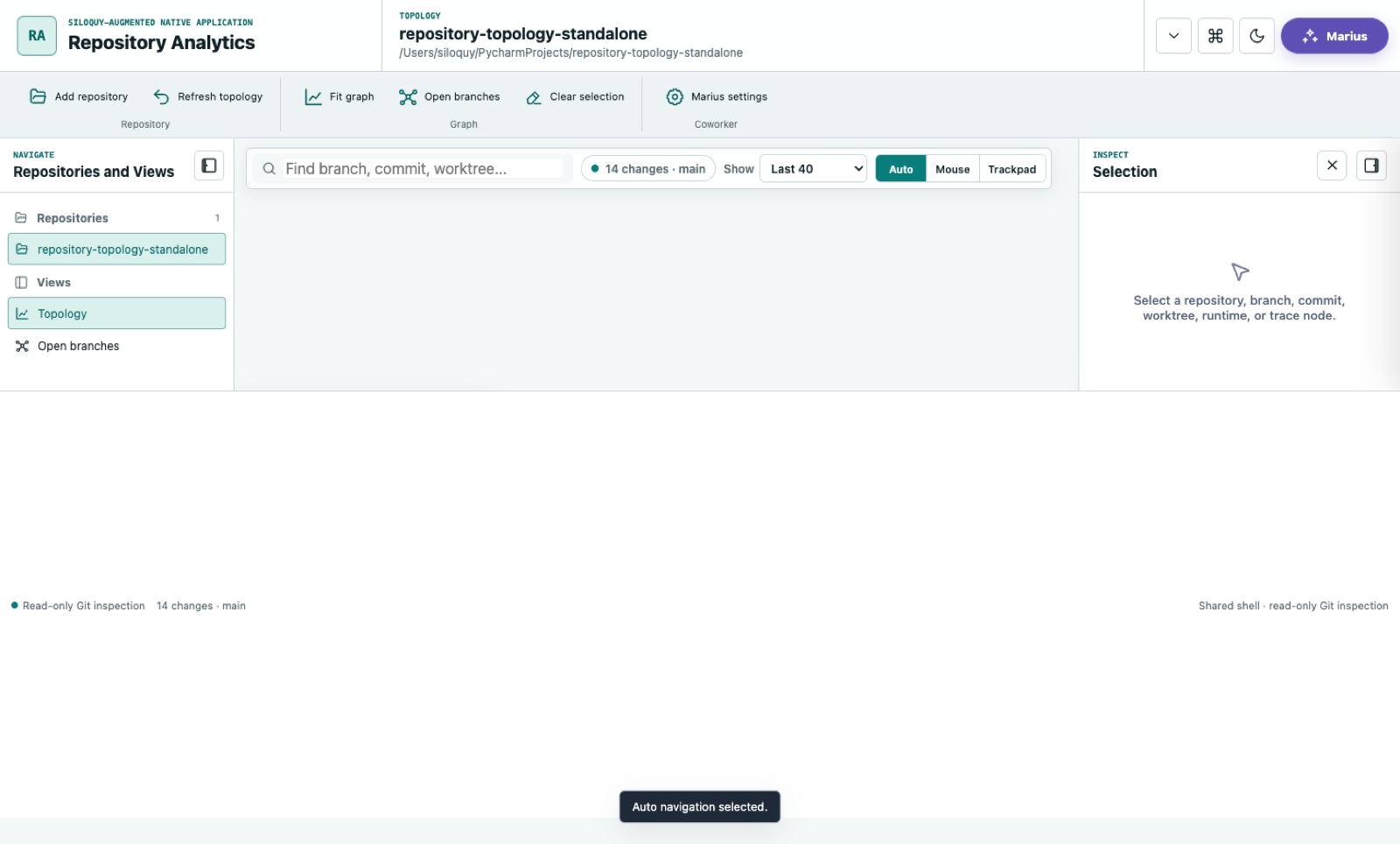
The unified workbench opens the same model through four current perspectives: Portae, Meaning Graphs, Messages, and Execution. Portae carries requirements and architecture; Meaning Graphs turns code into navigable graphical representations; Messages connects humans and agents; Execution keeps AI-era project work moving with evidence attached.

Requirements to architecture

PORTAE

Requirements, architecture, tests, defects, decisions, and implementation evidence become typed Cards with stable IDs and links. Human review and agent work share the same model.

Graphical code analysis and creation

MEANING GRAPHS

Large codebases become navigable meaning: source evidence, Meaning Cells, dynamic UML, dependencies, flow, and generation context stay connected from analysis through creation.

Decentralized human and agent messaging

MESSAGES

Messages are not side-channel chat. Humans and agents exchange structured context, answers, decisions, and references while every conversation remains attached to the work it affects.

Project management for the AI era

EXECUTION

Execution turns backlog, orders, agent tasks, implementation evidence, review, and defects into visible flow. Humans remain in control while agents move work forward inside the same trace.

“Every summary should resolve to evidence: source, requirement, decision, agent action, and commit.”

Experimental Guide · conversational dispatch

The Guide makes project work conversational.

Portae already carries a violet Guide entry point: a chat interface for dispatching work. Today it helps guide a human through the GUI. Tomorrow it can analyze software and operate Portae. Soon it becomes the conversational path for writing architecture and coding through Siloquy's diagram interface.

  • Guide a human through visible project work and dispatch decisions.
  • Analyze software while retaining the same requirements and review context.
  • Move from diagrams to architecture and implementation with source-backed evidence.
Portae Siloquy
Create a specification Deck from this concept.
I can open the work, dispatch agents, and keep decisions tied to Cards.
GUI guidance Software analysis Diagrams to code

Where the work stands today

Work is ongoing, and not every feature described on this page is available yet. Some parts are already usable in Portae today; Meaning Graphs, richer Messages, Execution, and dynamic multi-layer UML are still being expanded and hardened.